
Lymphoma | Teddy

Mast cell tumour / Mastocytoma | Edek
17 September 2021
Feline Injection-site Sarcoma / FISS | Czaruś
17 September 2021
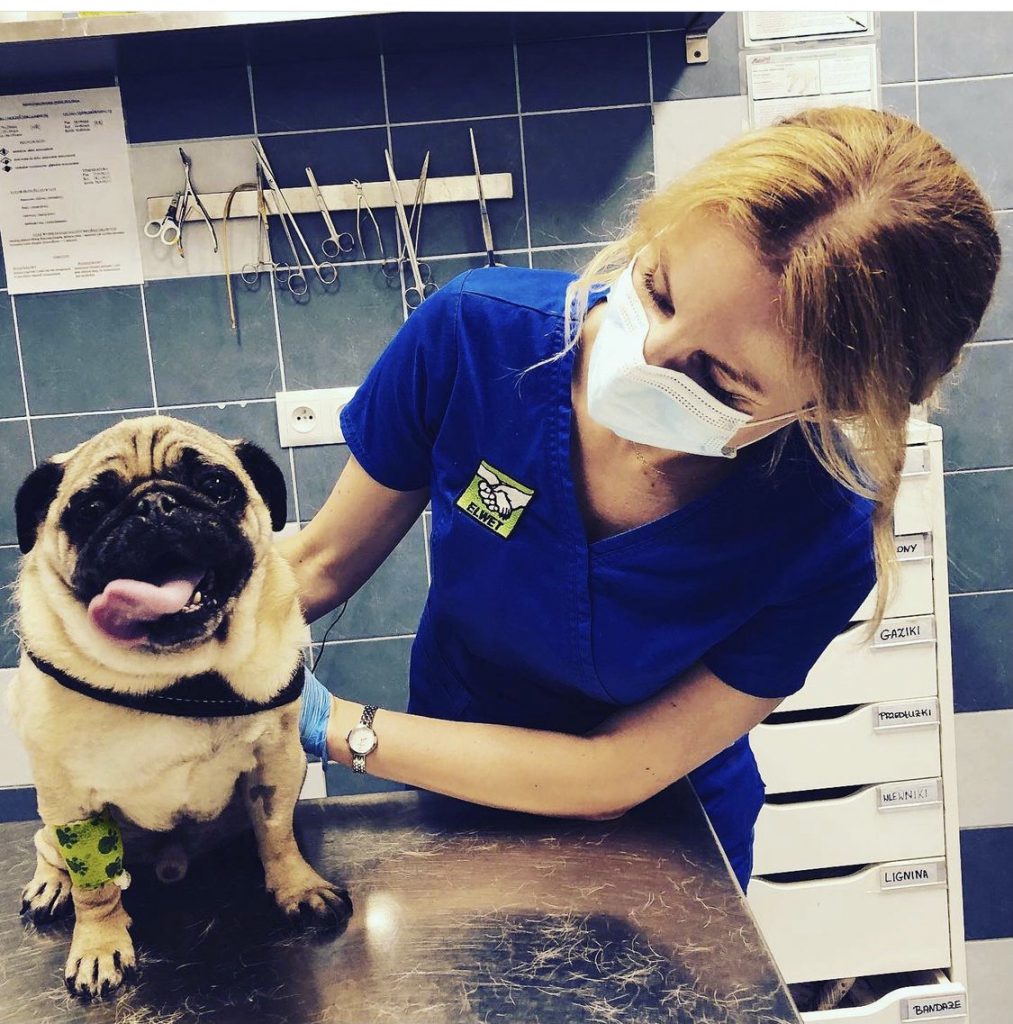
Teddy’s story
Lymphoma is the most common cancer in dogs. It is estimated that 13–114 cases of lymphoma are reported per 100,000 canine patients per year. An increased risk of lymphoma is described in the following breeds: Boxer, Bullmastiff, Basset Hound, St. Bernard, Scottish Terrier, Pit Bull, Airedale Terrier, Pit Bull, Bulldog, Rottweiler, Briard, Irish Setter.
Teddy was brought to the clinic because of progressive weakness, apathy, rapid weight loss and an enlarged abdomen. Ultrasound showed marked enlargement of the mesenteric lymph nodes, and a biopsy with immunophenotyping of the lymphocytes allowed a diagnosis to be made – T-cell lymphoblastic lymphoma. Teddy underwent very intensive chemotherapy lasting as long as 21 weeks, which made it possible to achieve remission of the disease.
Lymphoma in dogs – symptoms, diagnosis and treatment
Lymphoma is a cancer arising from lymphocytes. The most common form is multicentric lymphoma, in which the peripheral lymph nodes enlarge – under the jaw, in front of the shoulder blades and behind the knees. However, lymphoma can also develop in the abdominal cavity (as in Teddy, in whom the mesenteric lymph nodes were enlarged), in the mediastinum, in the gastrointestinal tract or in the skin.
Symptoms
- enlarged, usually painless lymph nodes,
- weakness, apathy, loss of appetite and weight loss,
- increased thirst (e.g. with raised blood calcium),
- depending on the location: vomiting, diarrhoea, difficulty breathing, skin lesions.
Diagnosis
A preliminary diagnosis is usually made by fine-needle aspiration (FNA) of a lymph node. The type of lymphoma is then determined (immunophenotyping – B or T lymphocytes), which matters for the prognosis and the choice of treatment, and the stage of the disease is assessed (blood tests, ultrasound, X-rays). Important: giving steroids before a diagnosis has been made can make diagnosis more difficult and reduce the effectiveness of later chemotherapy – so it is worth consulting an oncologist before starting them.
Treatment
The mainstay of treatment is multi-agent chemotherapy. In most dogs it achieves remission – resolution of the signs of disease – while maintaining a good quality of life. Chemotherapy can be supplemented with radiotherapy – since 2025, as the first in Poland, we have been using half-body irradiation (HBI) at the RTWet centre. In dogs that have achieved complete remission with chemotherapy, combining the two methods can significantly prolong survival.
Among the newer drugs developed with canine lymphoma in mind is rabacfosadine (Tanovea).