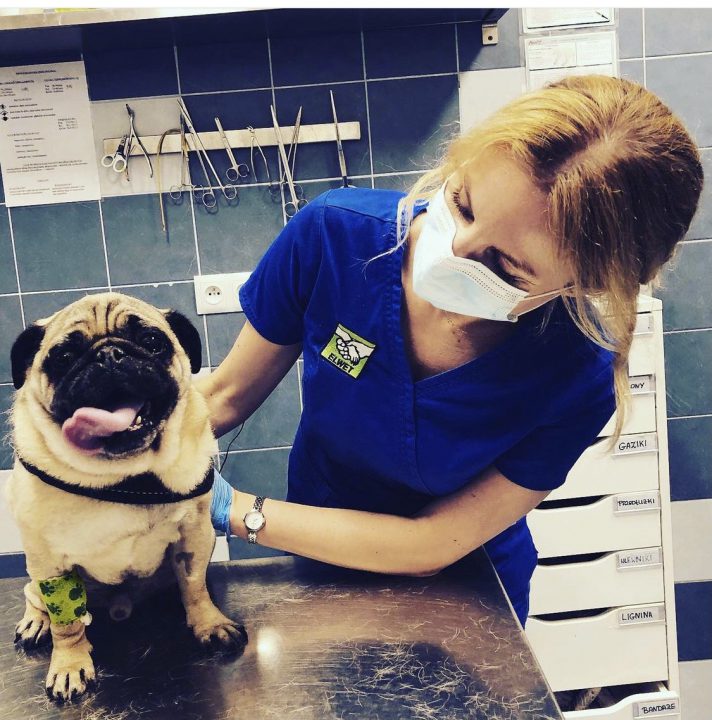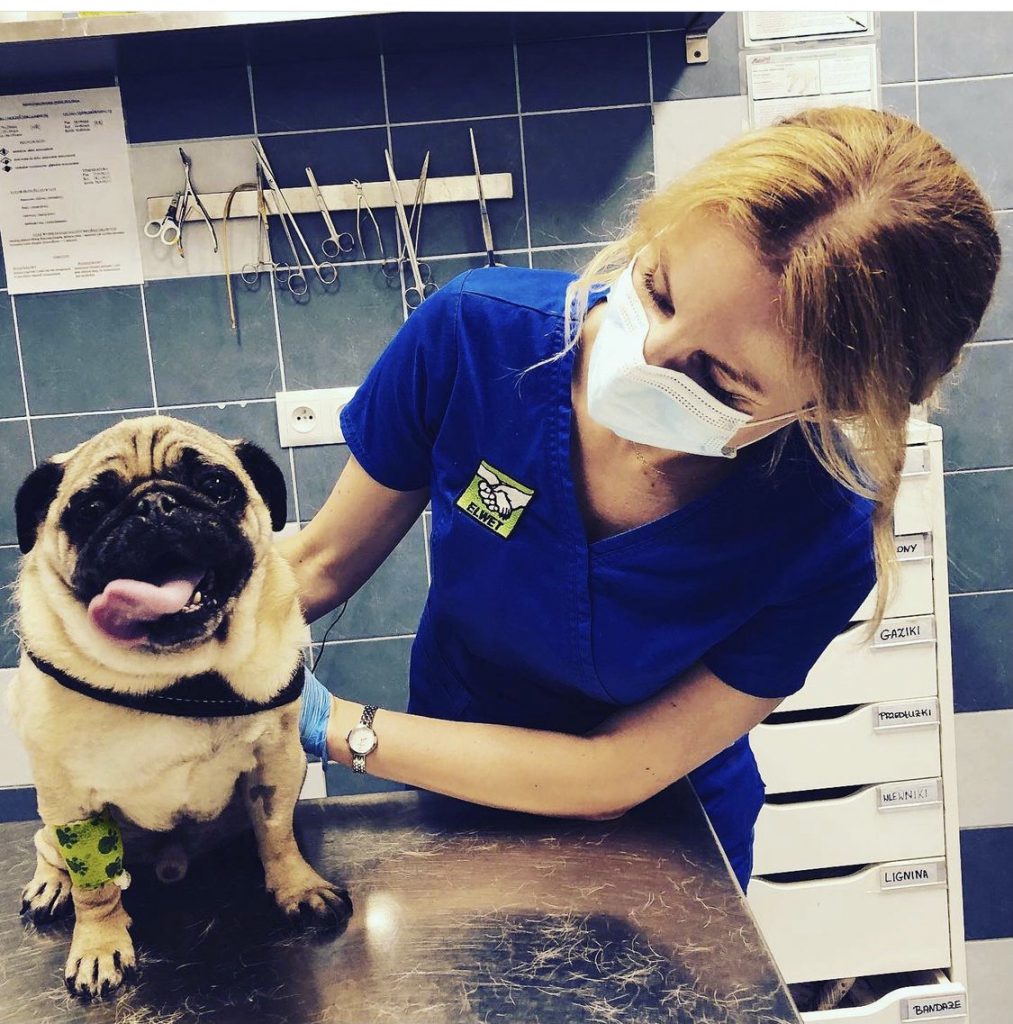

Hemangiosarcoma / HSA | Pele

Feline Injection-site Sarcoma / FISS | Czaruś
17 September 2021
Squamous cell carcinoma / SCC | Borys
17 September 2021
Pele’s story
Many years ago, at the beginning of my professional career, Pele had his spleen removed. Histopathology showed hemangiosarcoma. HSA (hemangiosarcoma) is the most common tumour of the spleen in dogs (51%). The median survival time of patients with this tumour treated with splenectomy alone is only 19 to 86 days.
Pele’s owner cared most about an oral form of treatment, so the mainstay of therapy was toceranib – a receptor tyrosine kinase inhibitor. It blocks tyrosine kinases in cancer cells that are responsible for the growth and spread of tumour cells and for the formation of new blood vessels within tumours. This drug is widely used in veterinary oncology.
Today, when owners choose an oral form of treatment for hemangiosarcoma, I rarely opt for toceranib – I focus on more modern solutions, mainly lenalidomide, a thalidomide derivative. Thanks to the very rapid development of oncology, we have access to more and more new drugs every year – I hope that soon I will be able to use further drugs in the treatment of hemangiosarcoma that are currently in clinical trials.
Splenic hemangiosarcoma in dogs – symptoms, diagnosis and treatment
Hemangiosarcoma (HSA) is a malignant tumour arising from the cells lining blood vessels. It most often develops in the spleen, but it can also affect the heart, liver or skin. Medium and large breeds are affected more often, including German Shepherds, Golden Retrievers and Labradors.
Symptoms
A splenic tumour may cause no symptoms for a long time. Often the first sign is its rupture and bleeding into the abdominal cavity: sudden weakness, pale mucous membranes, rapid breathing, an enlarged abdomen, or even collapse. This is an emergency requiring immediate veterinary help.
Diagnosis
The basis is abdominal ultrasound, a blood test (anaemia, low platelet count), chest X-rays and – because the heart may be involved – an echocardiogram. Not every lesion in the spleen is a malignant tumour (they can be, for example, haematomas or hyperplastic nodules), so the definitive diagnosis is always given by histopathology of the removed spleen.
Treatment
Treatment involves removal of the spleen (splenectomy), followed by chemotherapy or metronomic therapy and targeted drugs. Hemangiosarcoma tends to metastasise early, so the prognosis is guarded. In older dogs of predisposed breeds it is worth considering regular follow-up abdominal ultrasound.