

Feline Injection-site Sarcoma / FISS | Czaruś

Lymphoma | Teddy
17 September 2021
Hemangiosarcoma / HSA | Pele
17 September 2021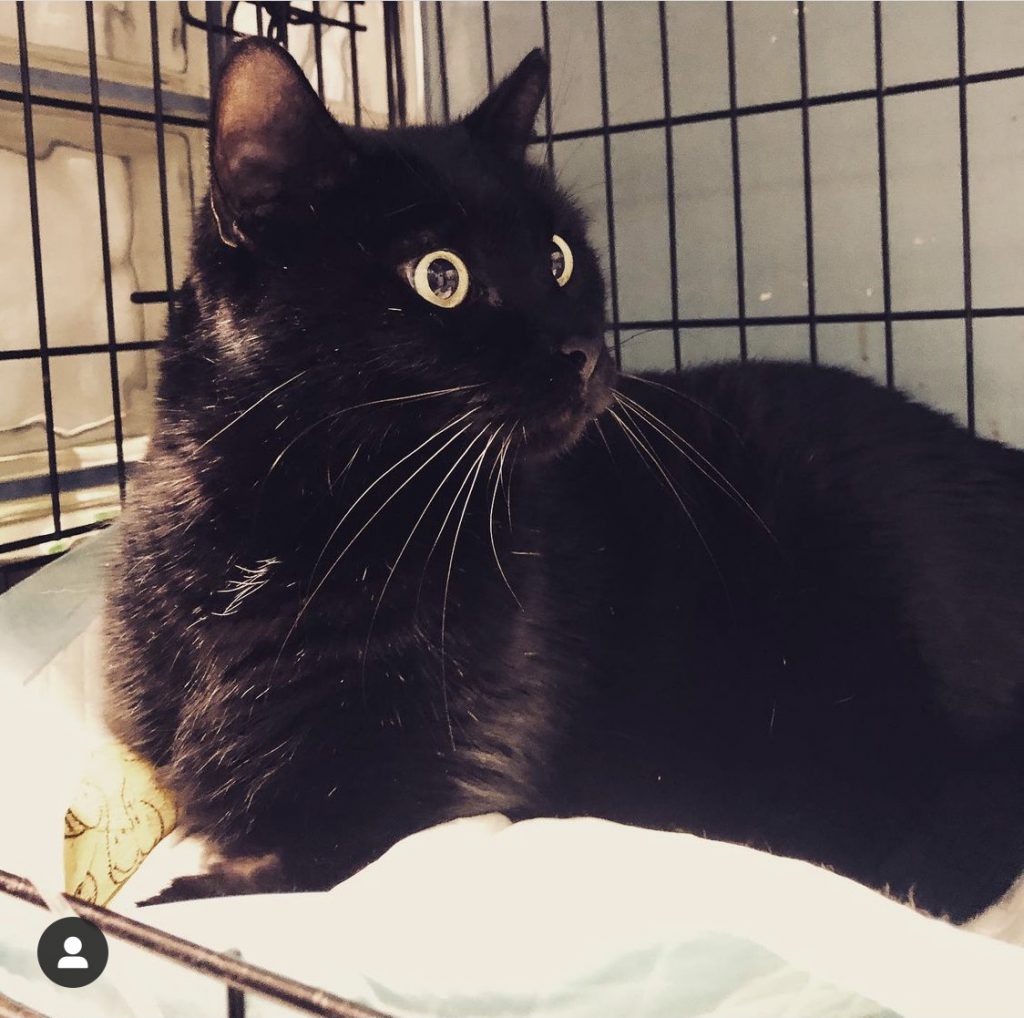
Czaruś’s story
FISS (feline injection-site sarcoma) is one of the most serious post-vaccination complications in cats. The common name of these tumours suggests that vaccinations are the main cause of this type of cancer, but FISS can be induced by any kind of local inflammatory response, caused by a bacterial infection, a microchip or any injection.
In Poland the incidence of FISS is estimated at 16 per 10,000 cats in general practices and 85 per 10,000 cats in practices specialising in oncology [Kliczkowska et al., 2015].
Prevention of FISS includes: avoiding injections containing irritating substances; vaccinations should be given as often as necessary, but as rarely as possible; the sites where vaccines were administered should be monitored; and injections should be given in places that can be easily operated on, avoiding the interscapular area.
Czaruś’s injection-site sarcoma occurred on the left thigh; unfortunately, computed tomography revealed numerous metastases within the abdominal cavity. Because of the disseminated nature of the cancer, Czaruś’s treatment consists solely of palliative chemotherapy with doxorubicin.
Czaruś’s case shows how important early cancer diagnostics are. An earlier diagnosis would have made it possible to combine surgery with radiotherapy or adjuvant chemotherapy, giving a greater chance of cure. Czaruś’s tumour behaved very aggressively – metastases developed very quickly, which is unusual for sarcomas. Surgery for an injection-site sarcoma combined with adjuvant radiotherapy usually allows long-term control of the disease and, in some cats, complete cure.
Feline injection-site sarcoma – how to recognise it early
After a vaccination or injection a small lump may appear at the injection site – this is usually a transient inflammatory reaction that disappears within a few weeks. Because a sarcoma can rarely develop at such a site, it is worth monitoring injection sites and following the “3–2–1” rule. A biopsy should be performed when the lump:
- persists for longer than 3 months,
- is larger than 2 cm in diameter,
- is still growing 1 month after the injection.
Diagnosis and treatment
Before treatment, computed tomography is usually performed; it shows the true extent of the tumour (these sarcomas infiltrate tissues more deeply than can be felt with the fingers) and allows possible metastases to be detected – as in Czaruś.
The first operation is the most important: the tumour must be removed with a wide margin of healthy tissue, because injection-site sarcomas have a strong tendency to regrow. Surgery is often supplemented with radiotherapy, and in the case of metastases or palliative treatment chemotherapy is used. That is why it is so important not to delay diagnostics – and to give vaccinations at sites that can easily be operated on if necessary.